Summary
- Weight loss on GLP-1 medication can include muscle. In clinical trials, around a quarter to over a third of the weight lost was lean mass rather than fat [1, 2].
- Protein helps protect muscle. Expert guidance during active weight loss is around 1.2–1.6 g of protein per kilogram of body weight per day, although individual needs vary [1].
- Spreading protein across meals may help. Around 25–30 g of high-quality protein per meal is linked to the strongest muscle-building response [3].
- Strength training matters too. Resistance exercise helps preserve muscle during weight loss and also supports strength [4].
- Older adults may need extra attention. Protein needs increase with age, so muscle can be harder to maintain during weight loss [5].
Sometimes the number on the scale stops moving, even when someone is eating well and exercising regularly. That does not always mean progress has stalled. A kilogram of muscle weighs the same as a kilogram of fat, but muscle is denser and takes up less space. When fat is lost while muscle is maintained or built, body weight can stay similar even as body composition improves, which is why clothes can fit differently before the scale changes.
On GLP-1 medication, the opposite can happen. Body weight can fall quickly as appetite and food intake decrease, but bathroom scales measure total weight, not where that weight comes from. Some of the weight lost can be muscle [1].
As an Accredited Practising Dietitian at Marley Spoon, I set the nutrition criteria for our GLP-1 Support range. In this guide, I explain why muscle loss on GLP-1 medication happens and how protein and strength training can help protect it. For a broader guide to eating during treatment, see What to eat on GLP-1 medication: Dietitian’s Guide.
What is lean mass, and why does it matter?
Body weight is made up of fat mass and lean mass. Lean mass includes everything that is not fat: skeletal muscle, organs, bone and body water. Muscle makes up roughly half of lean mass [1].
Skeletal muscle is in constant turnover. Muscle protein is broken down and rebuilt every day, and dietary protein supplies the amino acids needed for rebuilding. During an energy deficit (eating fewer calories than the body uses), particularly when protein intake falls along with total food intake, breakdown can outpace rebuilding, and muscle is lost.
Do you lose muscle on GLP-1 medication?
Some loss of lean mass is expected with any weight loss, including weight loss on GLP-1 medication.
- In one large clinical trial of a GLP-1 medication, participants lost an average of 13.6 kg. Of this, 8.3 kg (62%) was fat and 5.3 kg (38%) was lean mass, which the authors of a joint expert advisory estimate equates to around 20% of total weight loss as muscle, because muscle makes up about half of lean mass [1].
- In a body composition study of a dual GIP/GLP-1 medication, around 75% of the weight lost was fat and 25% was lean mass. The placebo group, who lost weight through diet and lifestyle changes alone, showed a similar proportion [2].
- Without structured strength training, modelling estimates that muscle accounts for around 10–15% of total weight loss in women and 20–25% in men [1].
The similar proportion in the placebo group is an important detail. Lean mass loss is not unique to GLP-1 medication. It is a feature of weight loss in general. What differs is the speed and scale of weight loss, and the reduced appetite that can make adequate protein intake harder to achieve.
The long-term significance is still being studied. One review found that diet-induced weight loss reduces muscle mass without necessarily reducing muscle strength [4]. Even so, muscle is easier to maintain than to rebuild, which makes it worth protecting during treatment.
How can you protect muscle on GLP-1 medication?
1. Prioritise protein at every meal
Higher protein intake helps preserve lean body mass and muscle during weight loss [4]. Expert guidance for adults undergoing active weight loss suggests around 1.2–1.6 g of protein per kilogram of body weight per day, or roughly 80–120 g for many adults [1]. This is a general guide rather than a universal target, as individual requirements vary with age, activity level, body composition and medical conditions [1].
Protein can come from animal or plant foods. In a meta-analysis of nine studies, soy protein supplementation produced similar gains in strength and lean mass with resistance training as whey and other animal proteins [6]. Suitable sources include chicken, fish, lean red meat, eggs, Greek yoghurt, milk, tofu, tempeh, beans and lentils.
Practical tip: Eat the protein component of a meal first, so it is eaten before fullness sets in.
2. Spread protein evenly across the day
How protein is spread across the day also matters. Around 25–30 g of high-quality protein in a meal is the amount shown to maximally stimulate muscle protein synthesis, the process of building new muscle. High-quality proteins contain all the essential amino acids the body needs, and include meat, fish, eggs, dairy and soy. As a guide, 100 g of cooked chicken breast provides around 30 g of protein. In older adults, the response is weaker when a meal contains less than about 20 g [3]. Rather than concentrating protein at the evening meal, spreading it more evenly helps each meal reach this amount.
On a reduced appetite, several smaller protein-containing meals and snacks may be easier to manage than three large meals.
Practical tip: Keep easy protein options in the fridge, such as yoghurt, boiled eggs and tinned fish, for days when cooking feels like too much.
3. Include strength training at least twice a week
Muscles adapt and get stronger when they are regularly worked against resistance. During weight loss, both endurance exercise (such as walking, cycling or swimming) and resistance exercise (such as lifting weights or using resistance bands) help preserve and improve muscle mass and strength [4]. The World Health Organization recommends muscle-strengthening activities involving the major muscle groups on at least two days per week for adults [7].
Strength training does not require a gym. Exercises using body weight, resistance bands or household items can provide a starting point, and difficulty can be increased gradually as strength improves. Exercise should suit individual fitness levels, physical limitations and medical needs. An Accredited Exercise Physiologist can help design a safe program, particularly for people who are new to exercise or managing an injury or health condition.
Practical tip: Two weekly sessions of sit-to-stands from a chair, wall push-ups, resistance-band rows and step-ups can cover the major muscle groups. Start with one or two sets of 8-12 repetitions of each.
4. Do not let food intake drop too low, especially if you are older
The lower total food intake falls, the harder it becomes to meet protein and nutrient needs. If you regularly struggle to finish even small meals, it is worth discussing with your prescribing doctor or an Accredited Practising Dietitian.
This is particularly important for older adults. Protein needs increase with age, and adults over 65 are recommended at least 1.0–1.2 g of protein per kilogram of body weight per day, rising to 1.2–1.5 g for those with acute or chronic illness [5]. Older adults taking GLP-1 medication may therefore have less margin for error when it comes to protein intake and muscle maintenance.
Practical tip: On low-appetite days, prioritise the protein part of a meal and save the rest for later, rather than skipping the meal entirely.
How Marley Spoon’s GLP-1 Support range can help
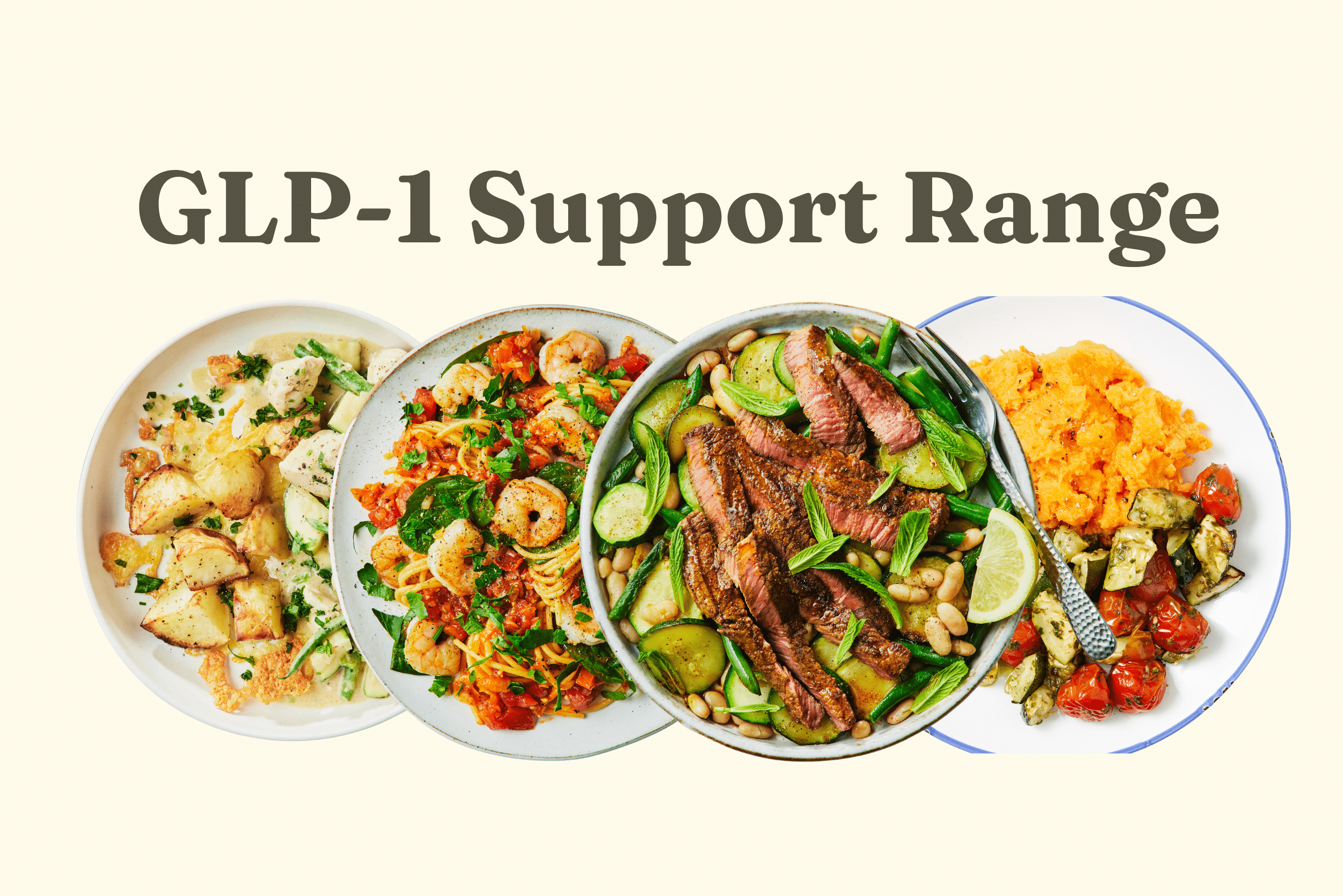
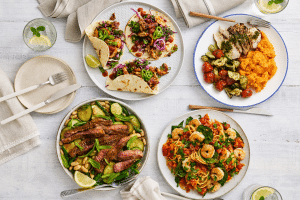
When appetite is reduced, meeting protein needs can be challenging. Marley Spoon’s GLP-1 Support range is a dietitian-approved collection of meal kits, ready-to-heat meals, snacks and drinks, developed using expert guidance on nutrition alongside GLP-1 medication [1]. I set the nutrition criteria for the range, including a minimum of 20 g of protein per serve. This threshold allows vegetarian and vegan dishes to qualify, while the range averages around 40 g of protein per serve. At that level, one meal can provide a third to a half of an 80–120 g daily protein target.
Explore Marley Spoon’s GLP-1 Support range
Each week, the range includes at least 10 GLP-1 Support recipes and 5 ready meals, selected from a library of more than 280 recipes*. Single-serve options are also available. Nutrition information for every meal can be found on the recipe card and in the app. The range is available to anyone, whether taking GLP-1 medication or simply looking for convenient, balanced meal options. It is a dietary filter within Marley Spoon’s regular menu.
Weight lost on GLP-1 medication can include muscle as well as fat. Eating enough protein and doing regular strength training help make sure more of the weight lost comes from fat, supporting long-term health and strength.
*Weekly availability for each plan type: XXX
This is general information, not personal advice. GLP-1 Support meals complement, but do not replace, medical care. If you are on a GLP-1 medication, follow your prescriber’s guidance, and see your GP or an Accredited Practising Dietitian for advice that fits you.
References
1. Mozaffarian D, Agarwal M, Aggarwal M, Alexander L, Apovian CM, Bindlish S, et al. Nutritional priorities to support GLP-1 therapy for obesity: a joint Advisory from the American College of Lifestyle Medicine, the American Society for Nutrition, the Obesity Medicine Association, and The Obesity Society. Obesity (Silver Spring). 2025;33(8):1475-503. doi: 10.1002/oby.24336
2. Look M, Dunn JP, Kushner RF, Cao D, Harris C, Gibble TH, et al. Body composition changes during weight reduction with tirzepatide in the SURMOUNT-1 study of adults with obesity or overweight. Diabetes Obes Metab. 2025;27(5):2720-9. doi: 10.1111/dom.16275
3. Paddon-Jones D, Rasmussen BB. Dietary protein recommendations and the prevention of sarcopenia. Curr Opin Clin Nutr Metab Care. 2009;12(1):86-90. doi: 10.1097/MCO.0b013e32831cef8b
4. Cava E, Yeat NC, Mittendorfer B. Preserving healthy muscle during weight loss. Adv Nutr. 2017;8(3):511-9. doi: 10.3945/an.116.014506
5. Bauer J, Biolo G, Cederholm T, Cesari M, Cruz-Jentoft AJ, Morley JE, et al. Evidence-based recommendations for optimal dietary protein intake in older people: a position paper from the PROT-AGE Study Group. J Am Med Dir Assoc. 2013;14(8):542-59. doi: 10.1016/j.jamda.2013.05.021
6. Messina M, Lynch H, Dickinson JM, Reed KE. No difference between the effects of supplementing with soy protein versus animal protein on gains in muscle mass and strength in response to resistance exercise. Int J Sport Nutr Exerc Metab. 2018;28(6):674-85. doi: 10.1123/ijsnem.2018-0071
7. Bull FC, Al-Ansari SS, Biddle S, Borodulin K, Buman MP, Cardon G, et al. World Health Organization 2020 guidelines on physical activity and sedentary behaviour. Br J Sports Med. 2020;54(24):1451-62. doi: 10.1136/bjsports-2020-102955